Agent Framework Source Notes
Agent Framework Source Notes
This series does not rank frameworks. It follows one Agent run and asks concrete questions: which component calls the model, which one executes tools, where state is stored, when an operation needs approval, and how steps or multiple Agents connect. The first five chapters establish that comparison; the next five examine the choices made by ADK, Agno, AutoGen, CrewAI, and Eino; the final three use tRPC-Agent-Go to separate current context, cross-session Memory, and Skills that may be reused in future runs.
Source links are pinned to the public snapshots named in each article, while product positioning comes from project READMEs and official docs. Every chapter follows one request or task: how input enters, which component changes state, what the reader can observe, and what remains after failure.
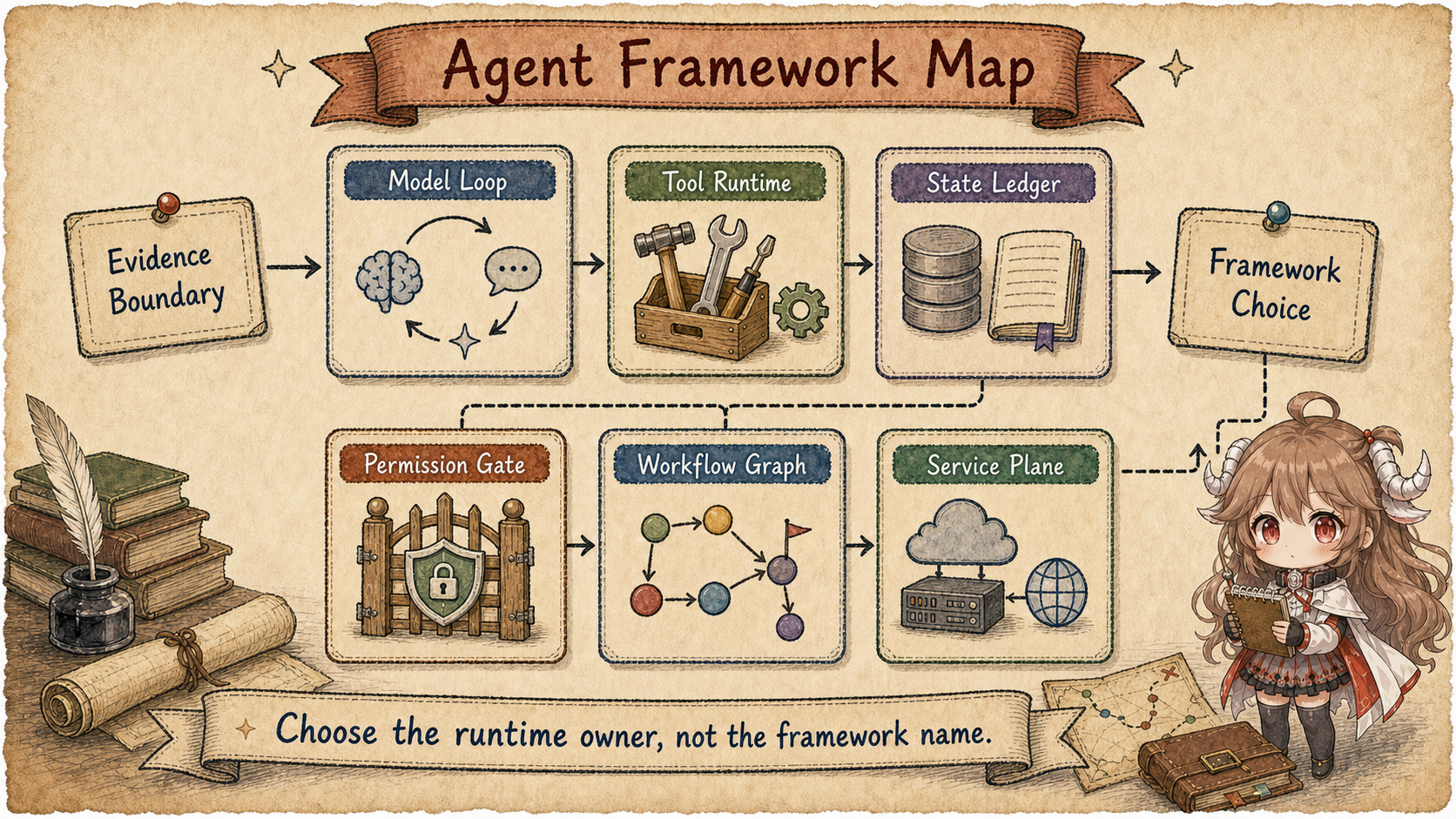
Use the Claude Code and Codex execution paths as a reference, then compare which components call models, execute tools, store state, and check permissions.
Source Notes · Part 2 Why Pi treats a Coding Agent as an extensible harness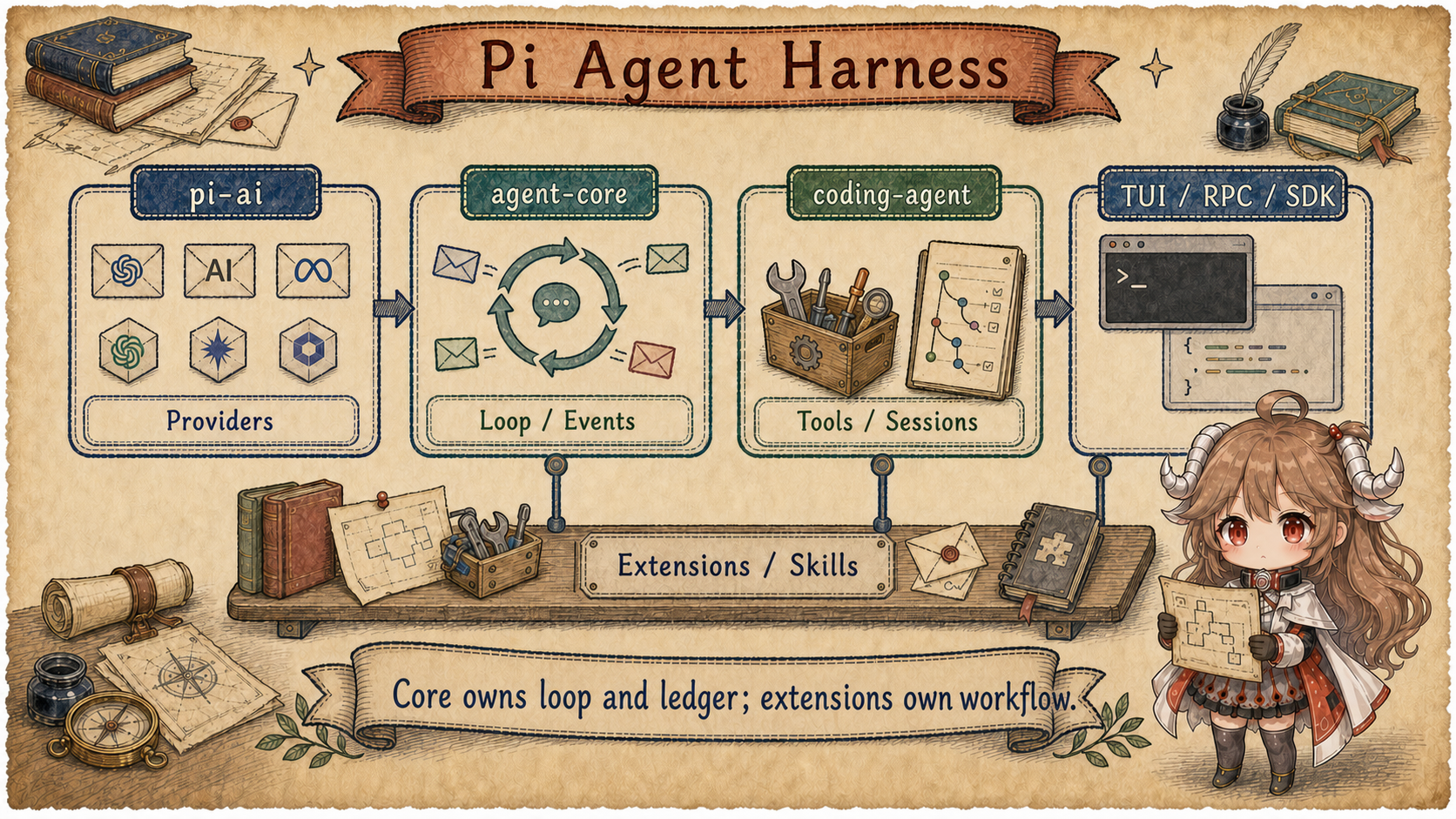
Follow pi-ai, agent-core, and coding-agent to see how a minimal implementation runs the tool loop, stores the session tree, and compacts context while leaving plans, sub-agents, MCP, and permission policy to extensions.
Source Notes · Part 3 Following AgentScope reply_stream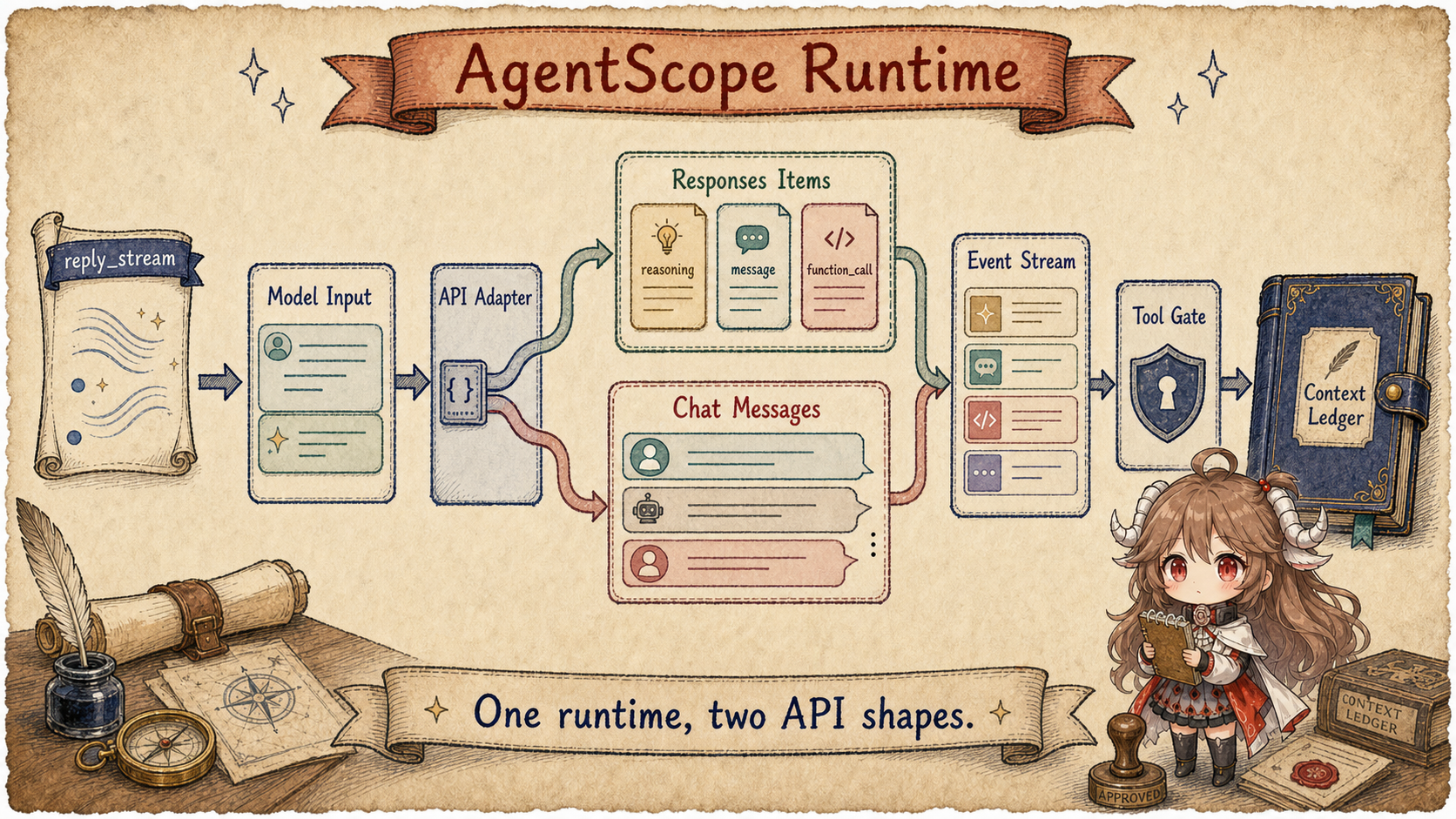
Expand Pi's minimal baseline by following how AgentScope emits events, records state, approves tools, and adapts OpenAI Responses differently from Chat Completions.
Source Notes · Part 4 Where does the Agent work?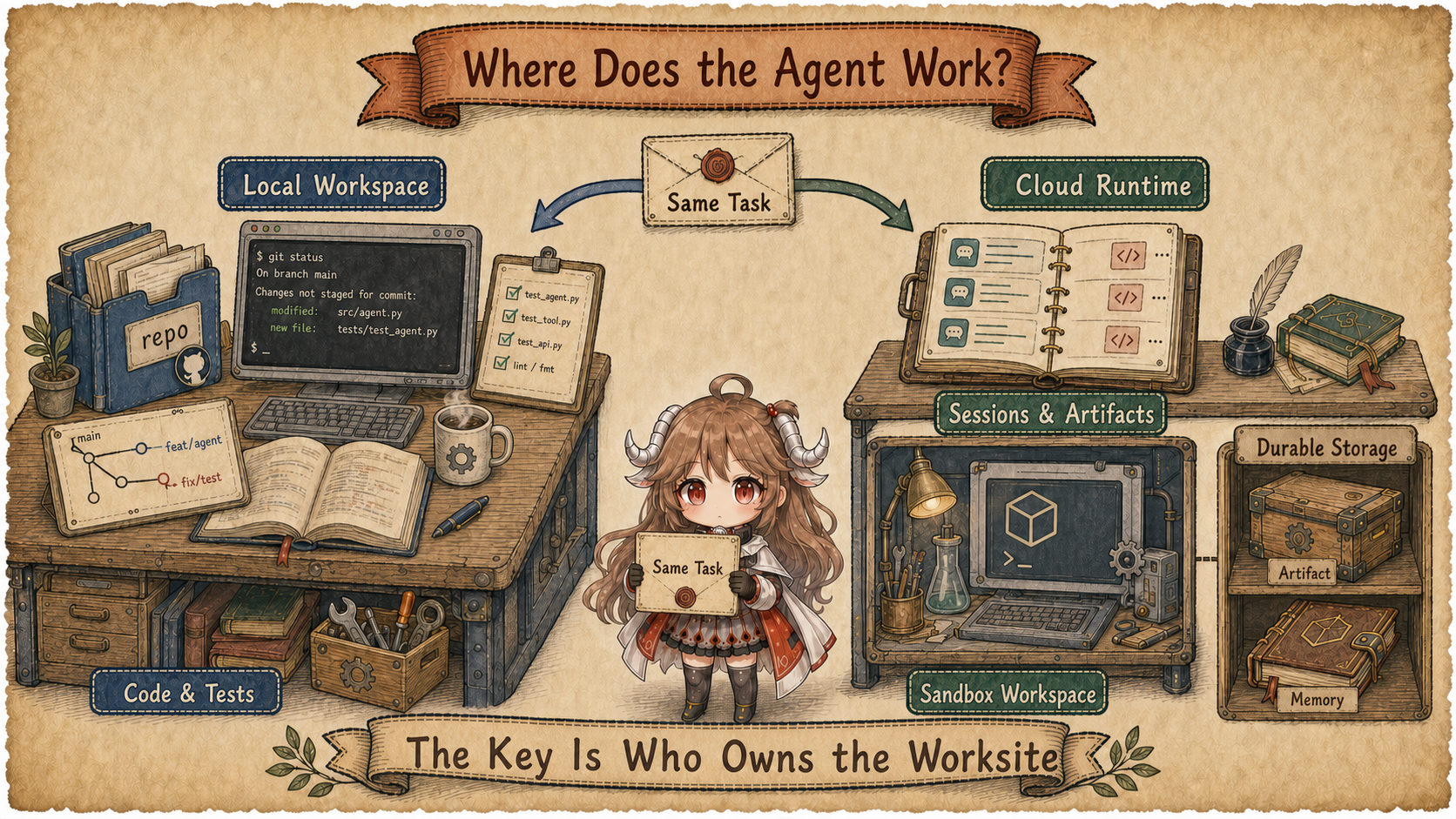
Use one scripting task to separate Coding / General from Local / Cloud, then see where workspace, sandbox, session, artifact, and memory live—and which survive sandbox deletion.
Source Notes · Part 5 Who does an Agent protocol connect?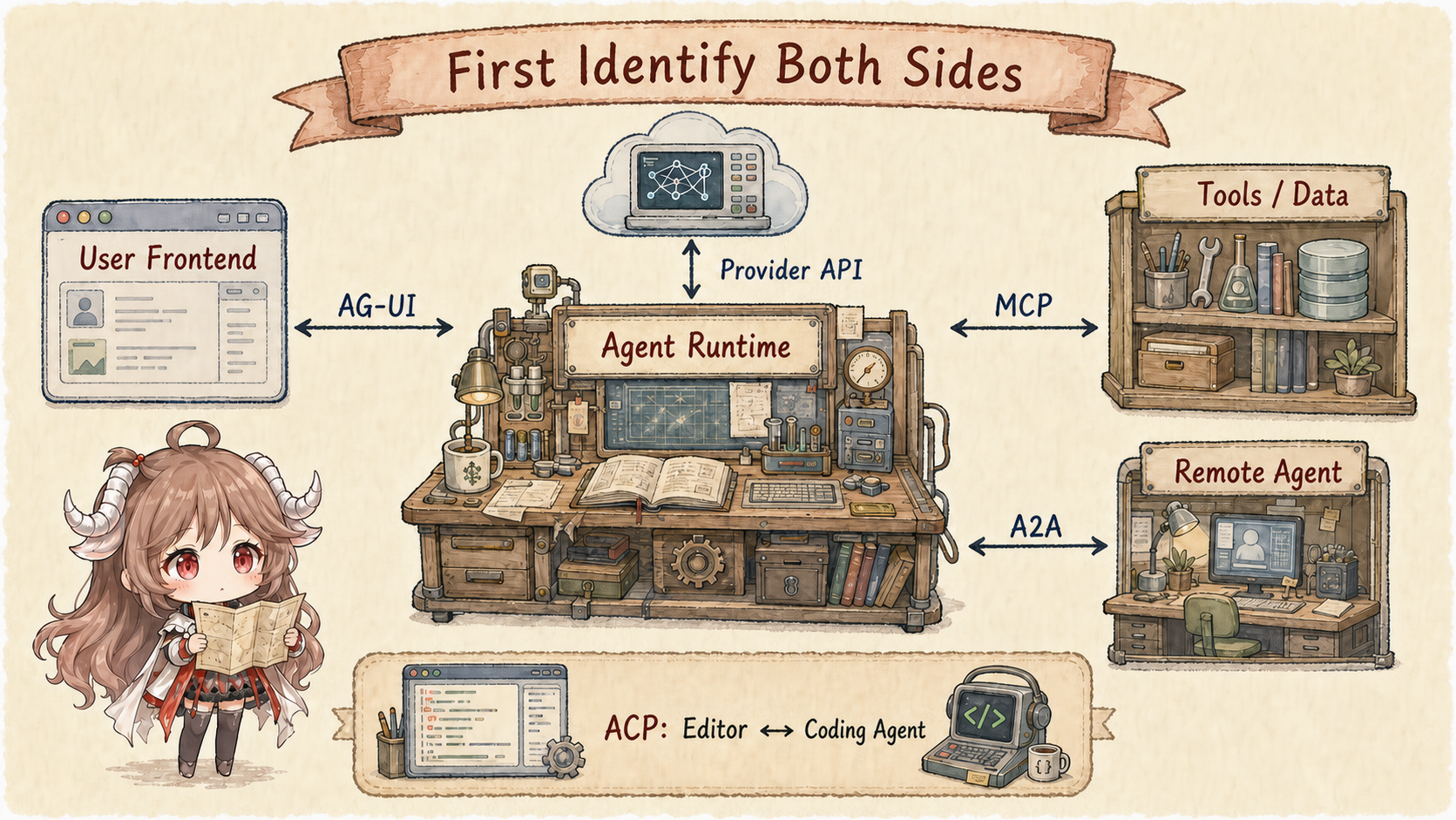
Use one contract-renewal task to identify which endpoints MCP, A2A, AG-UI, Agent Client Protocol, and model Provider APIs connect, what they carry, and what they cannot replace.
Source Notes · Part 6 Why ADK Python puts Agent and Workflow together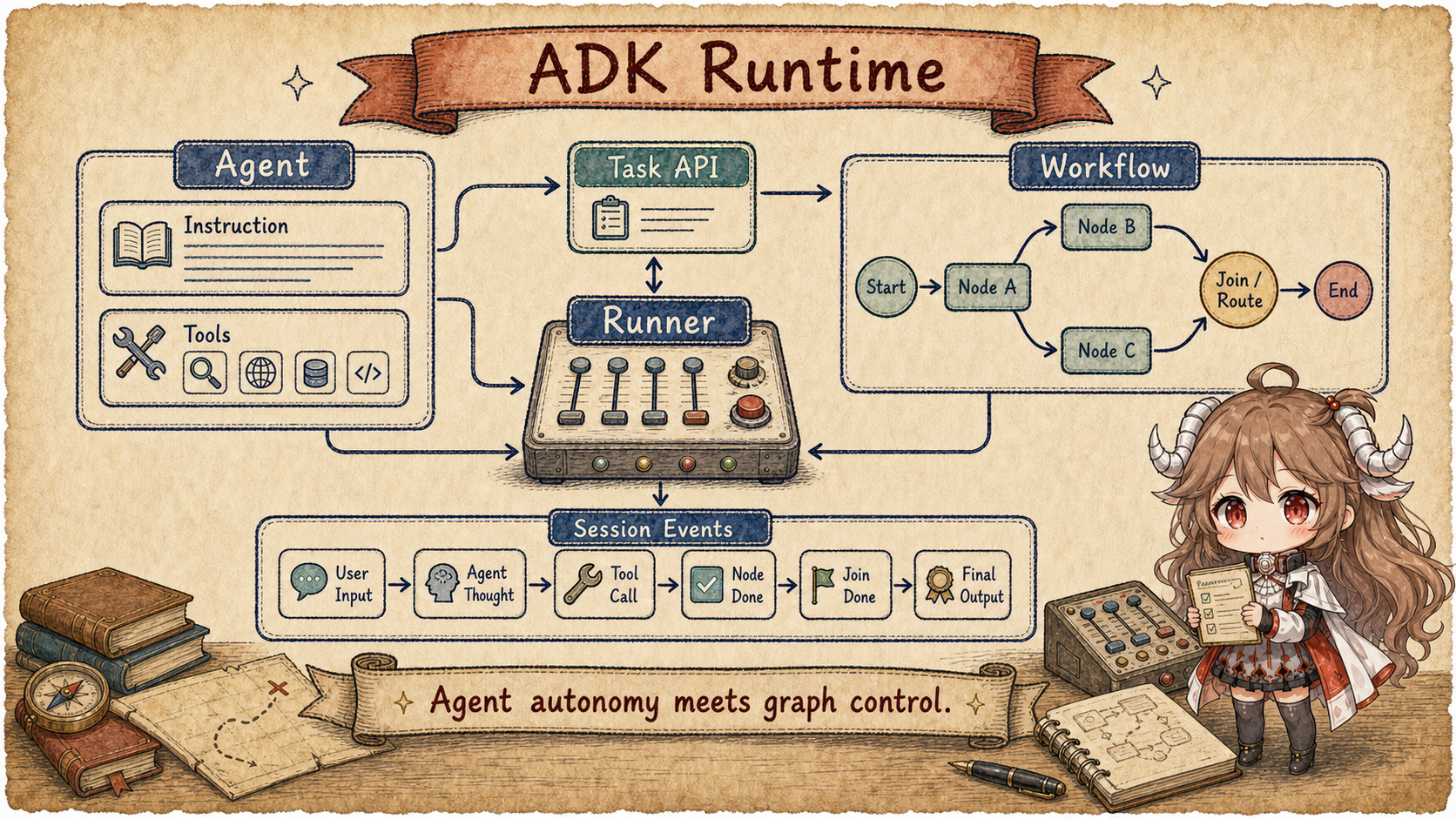
See how one ADK 2.0 Runner executes autonomous Agents and deterministic Workflows, records progress as Session Events, and exposes long-running work through the Task API.
Source Notes · Part 7 Agno turns Agents into a platform, not just objects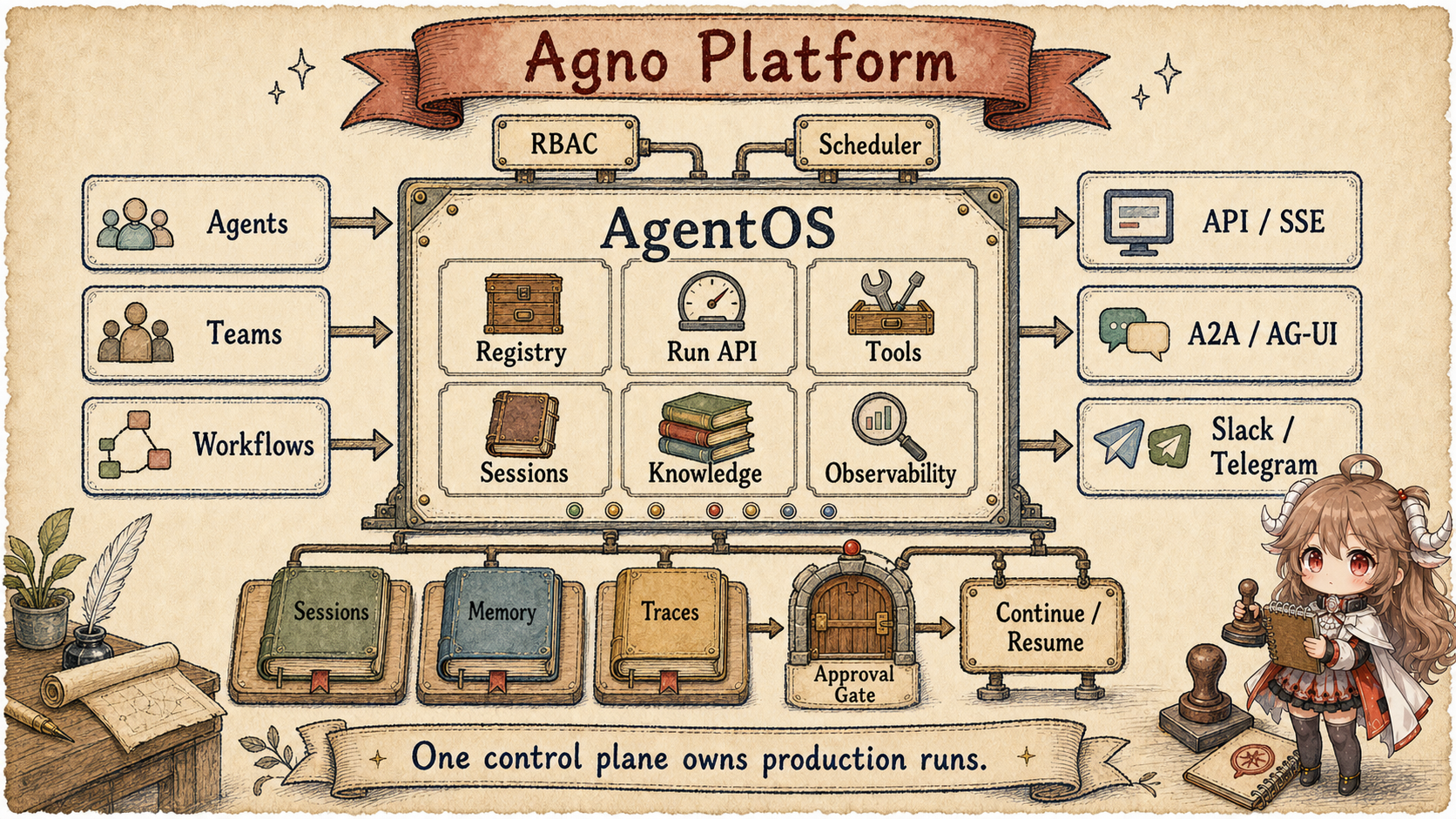
See how AgentOS registers Agents, Teams, and Workflows, exposes run APIs and storage, and connects approvals, RBAC, scheduling, and external interfaces to the same service.
Source Notes · Part 8 From AutoGen to Microsoft Agent Framework: from multi-agent chat to production orchestration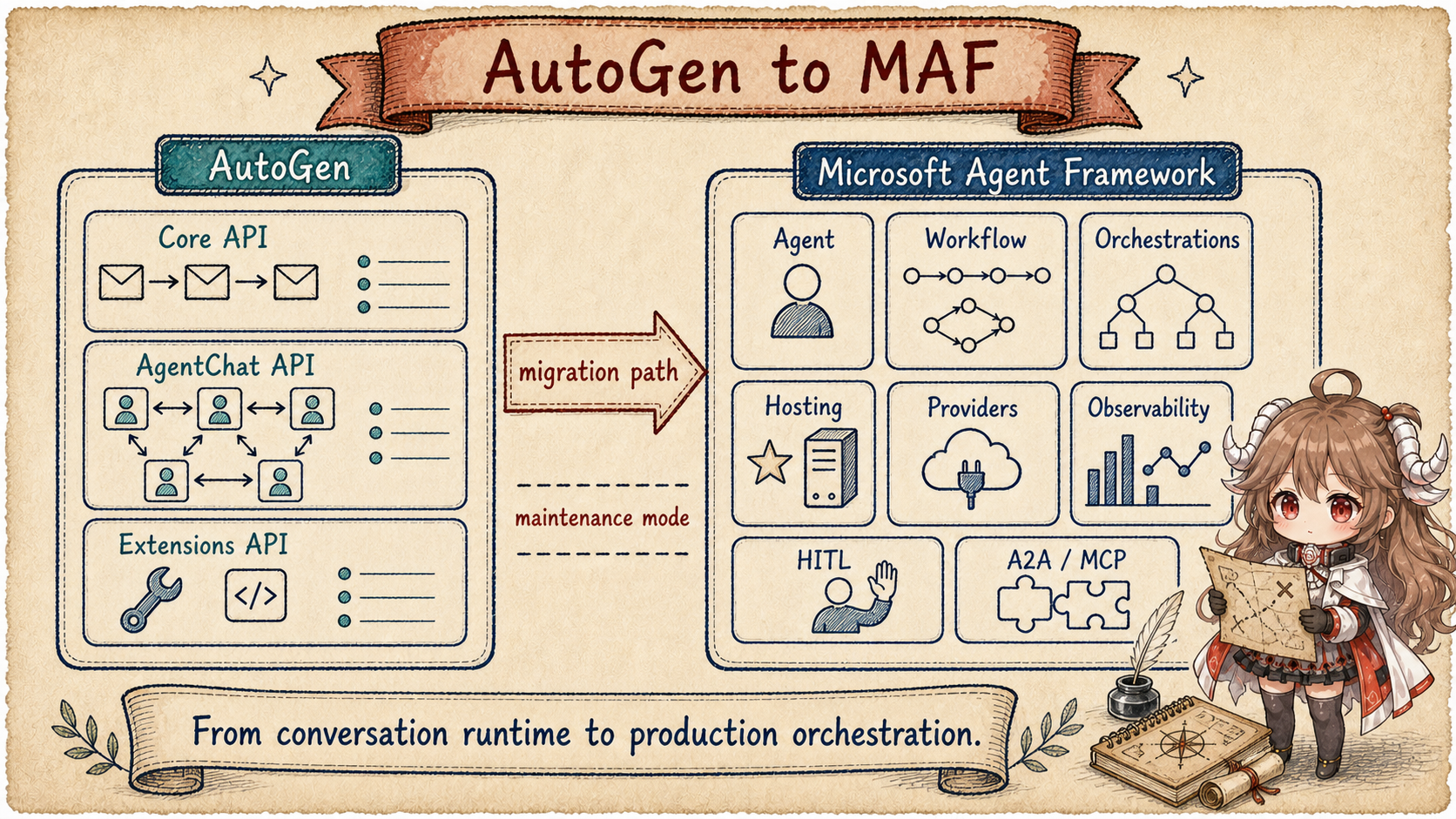
AutoGen is now in maintenance mode. Read from Core runtime and AgentChat teams to MAF Agent, Workflow, Orchestrations, and Hosting.
Source Notes · Part 9 CrewAI models Agents as team workflow, not a message bus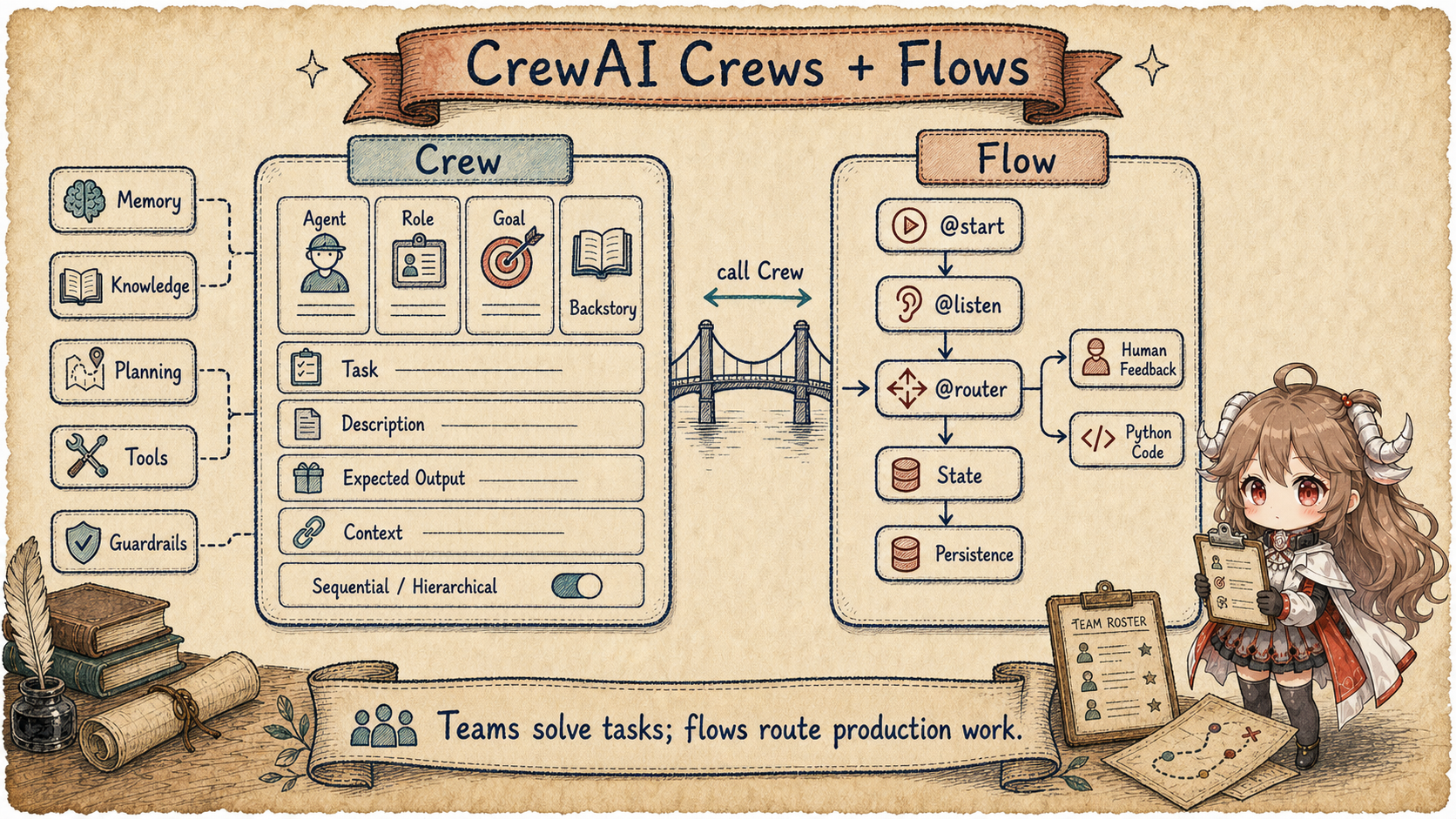
Read Agent, Task, Crew, Process, and Flow source to see how CrewAI separates team autonomy from production control.
Source Notes · Part 10 How Eino compiles Agent apps into Go execution graphs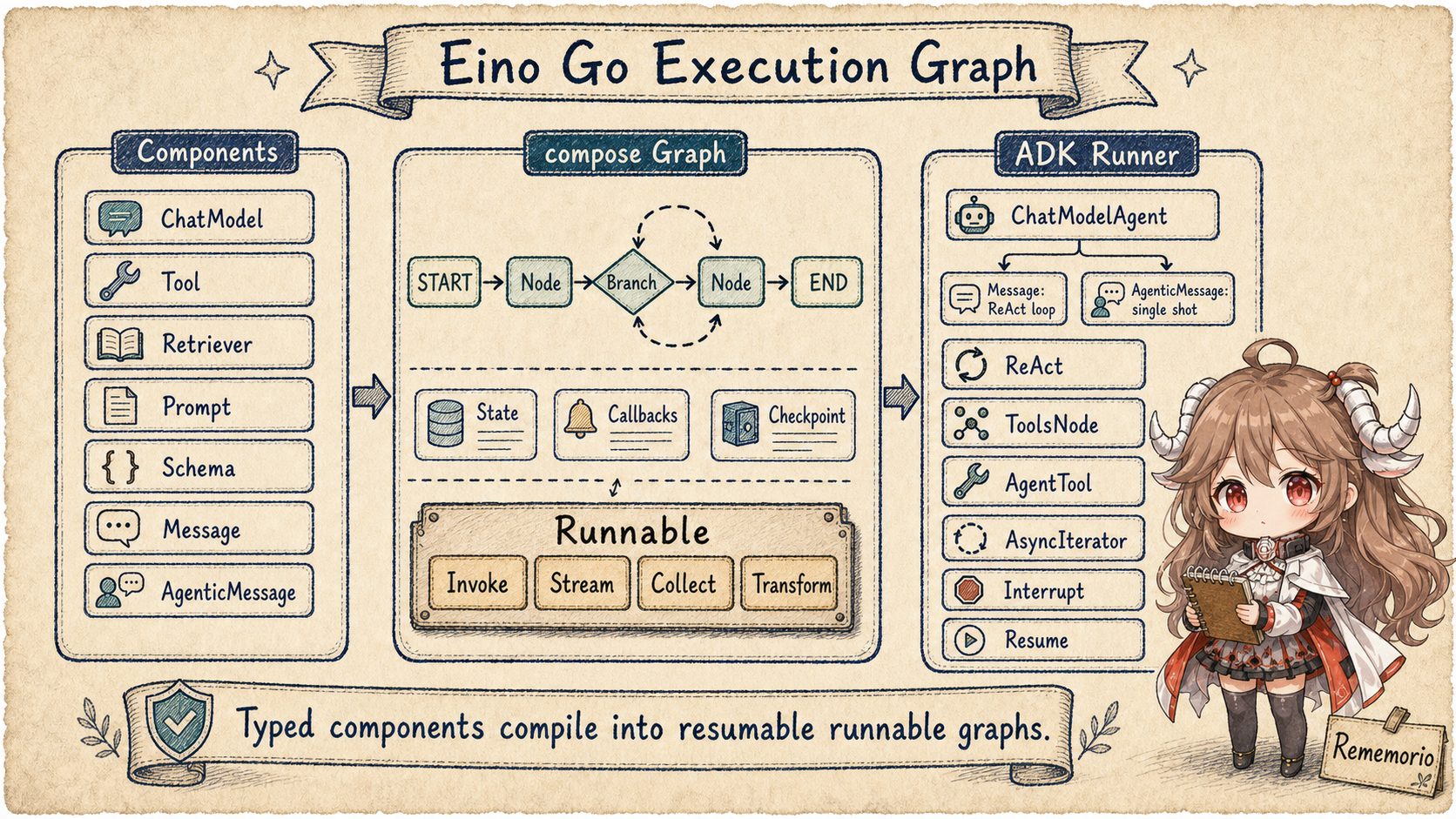
See how Component, Runnable, and compose Graph compile into executable Go, then follow checkpointing, callbacks, ADK Runner, ChatModelAgent, and AgentTool.
Source Notes · Part 11 How tRPC-Agent-Go runs work and manages context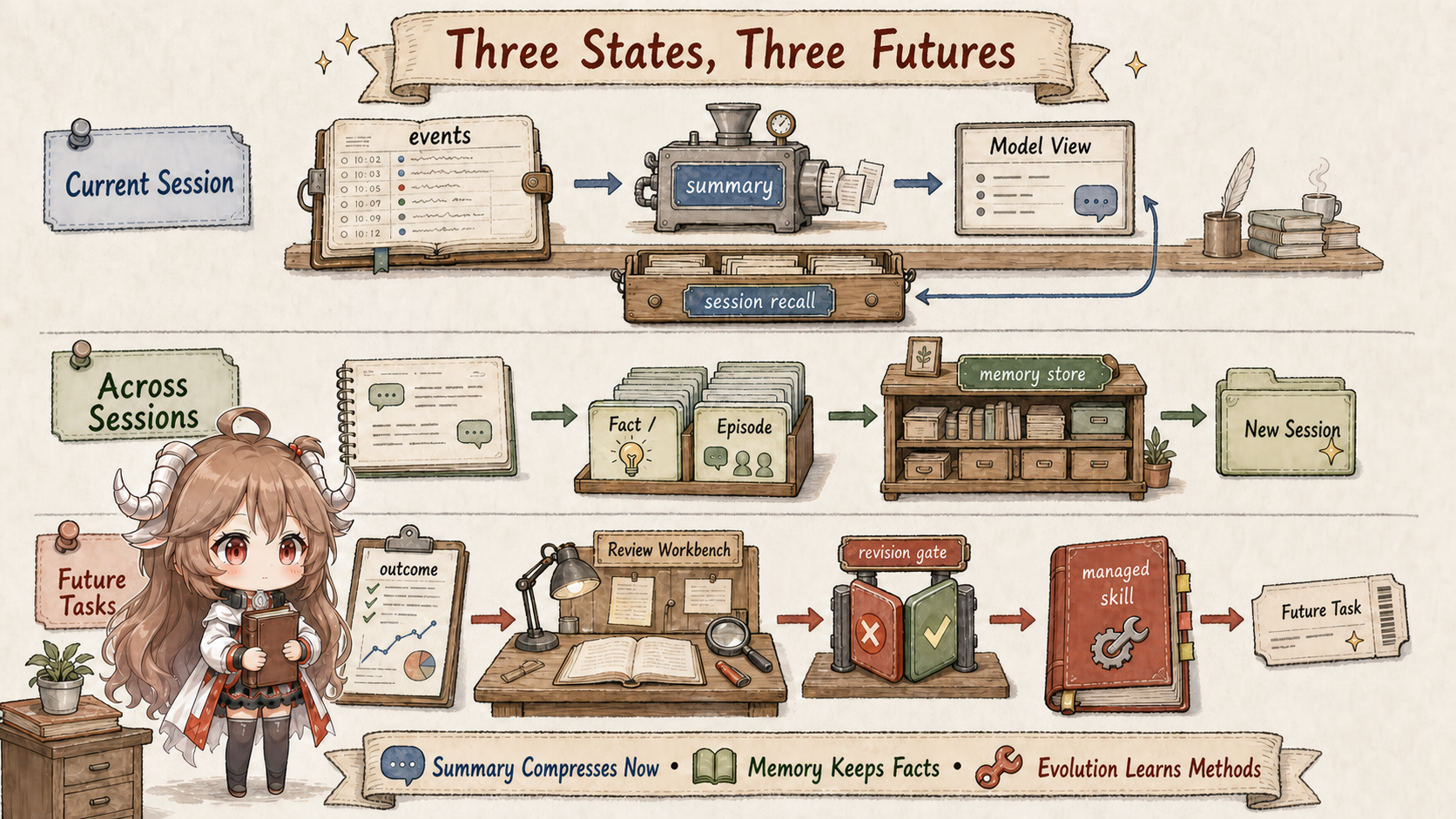
Follow one request through Runner, Agent, Model, and services, then see when Summary, Context Compaction, and Session Recall compress, rebuild, and recover original events.
Source Notes · Part 12 tRPC-Agent-Go Memory: from experience to searchable knowledge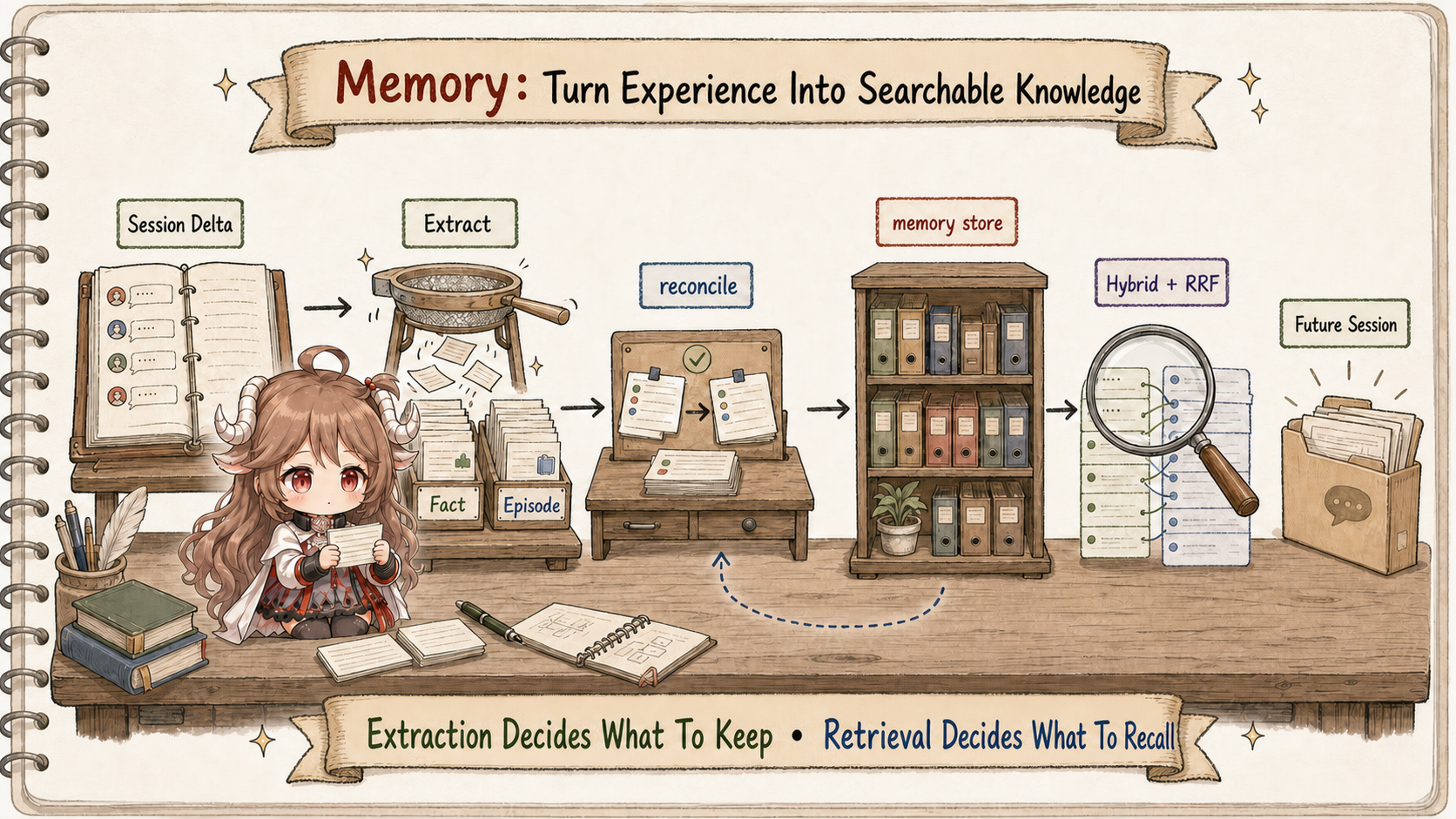
Follow one environment fact through delta, extraction, reconciliation, Fact/Episode storage, and hybrid retrieval, then test quality, cost, and refusal regressions on LoCoMo-10.
Source Notes · Part 13 How tRPC-Agent-Go Evolution learns and rejects bad Skills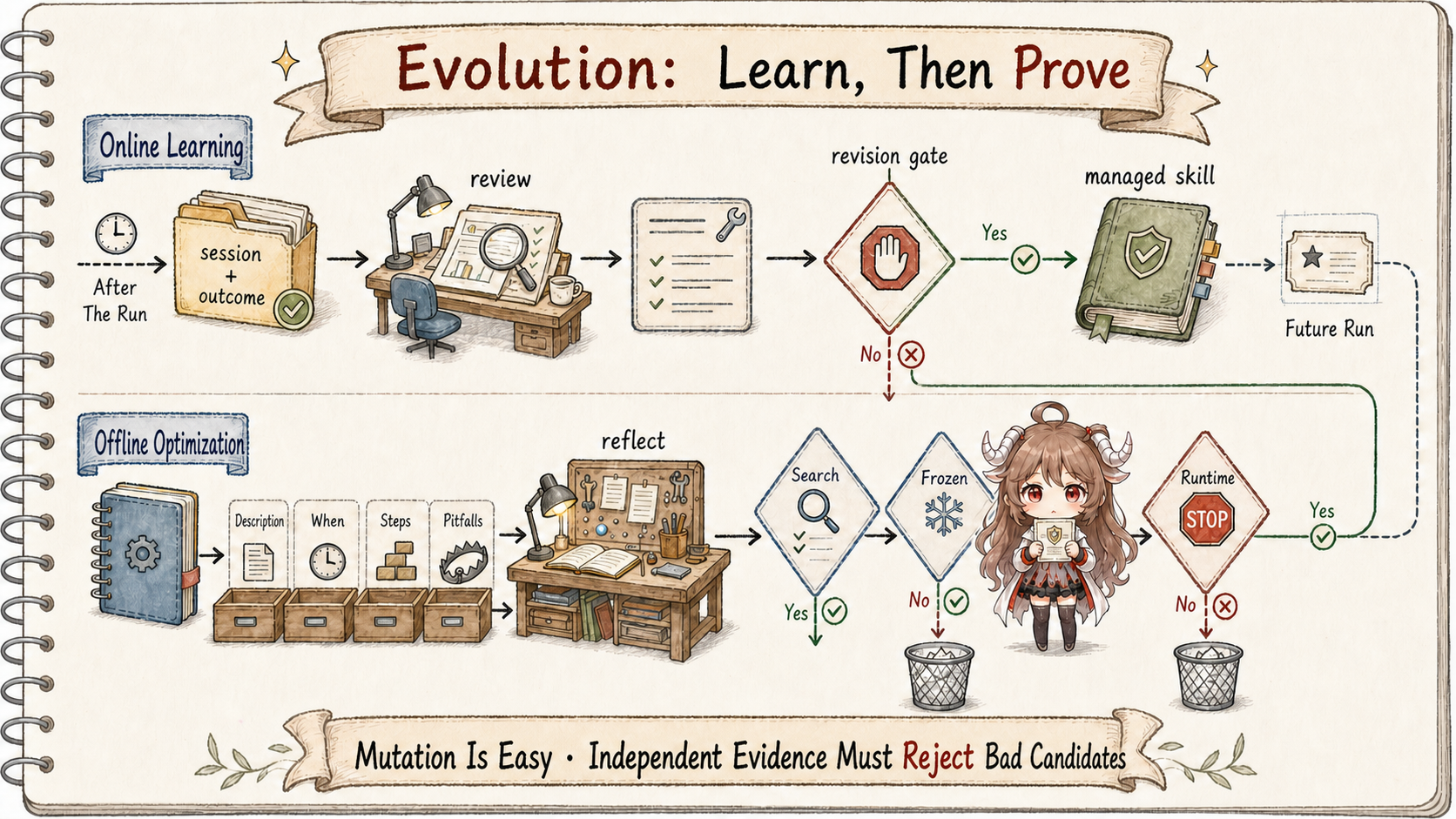
Follow online review and Skill publication separately from GEPA offline optimization and SkillCraft benchmarks, distinguishing candidate edits, validation evidence, and adoption.